What is barefoot?
Barefoot shoes are designed to respect the natural movement of the foot, as if walking barefoot.
Unlike conventional shoes, they don’t force, shape or restrict. They allow the foot to develop freely, becoming strong and balanced.
Because when we remove interference, the body knows what to do.
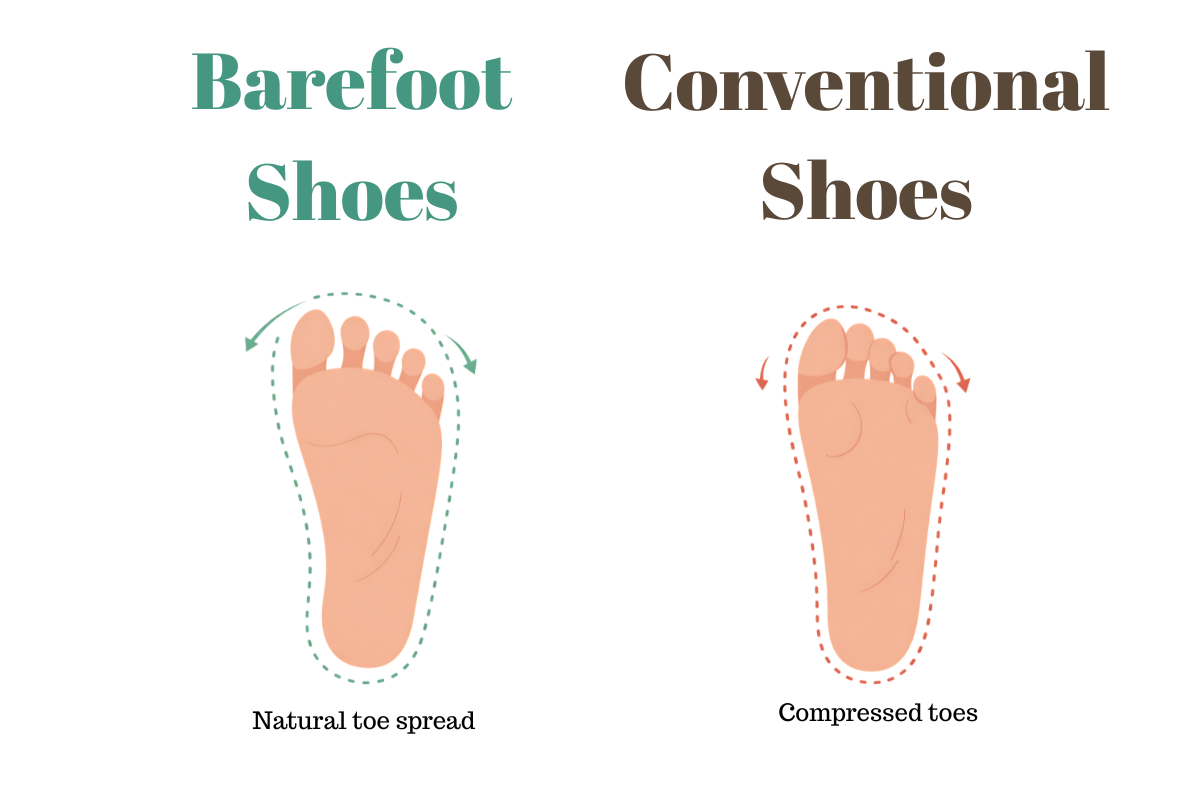
Barefoot
Wide toe box
Thin and flexible sole
Zero drop
No rigid heel counter
Conventional
Narrow toe box
Thick and rigid sole
Elevated heel (drop)
Rigid heel counter
Footwear must meet all of these criteria. Even if one is missing, it cannot be considered barefoot.
Why it matters so much for children
Children’s feet are constantly developing.
They are still forming structures, with softer bones and muscles that need natural stimulation.
When footwear interferes too early, it can limit that development.
Barefoot shoes allow:
- natural movement
- better balance
- greater body awareness
- proper muscle development
Growing with freedom makes a difference.
And during first steps
When it comes to first steps, less is more.
Whenever possible, being barefoot is ideal.
When shoes are needed, they should only protect, without interfering.
Very rigid or structured shoes can make balance and confidence more difficult.
How to choose the right size
Choosing the right size is just as important as choosing the right model.
Ideally, you should measure your child’s foot and add a margin between 0.8 cm and 1.2 cm, ensuring comfort and room to grow.
Not too tight
Not too loose
A good fit ensures comfort and freedom of movement.
View full foot measuring guide
At Koru Family Store
At Koru, we carefully select each model based on healthy foot development.
We work with brands that respect these principles, so you can choose with confidence.
Because foot development should never be left to chance.